Sri Lakshminarayana Swamy Devastanam
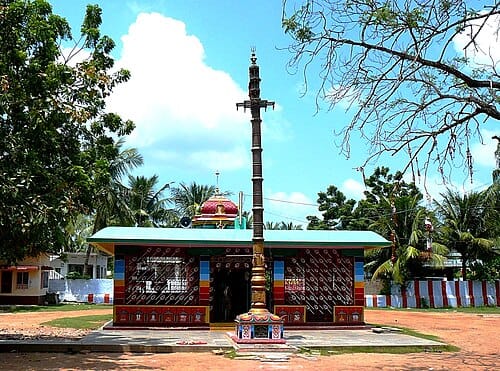
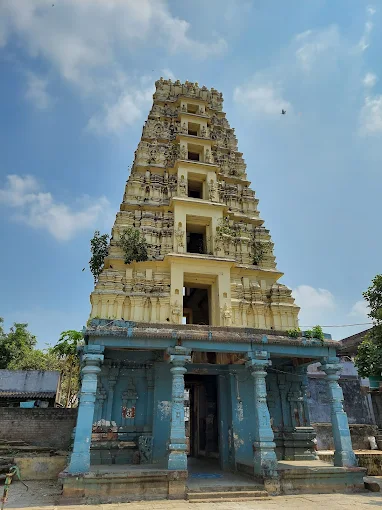
Temple features The Pancha Bhavan Narayana Kshetras, Pancha Bhoota Lingas, Pancharamas, and Pancha Lakshmi Narayana Kshetras are renowned in Telugu land. In the Sahyadri Khandam of the Skanda Purana, Sage Vyasa, in the Brahma Vaivarta section, described the greatness of the Pancha Lakshmi Narayana Kshetras. Avanigadda was once the hermitage of Sage Vasishta, the royal preceptor of Lord Sri Rama. Tradition says that Goddess Sita used to listen to discourses on Dharma from Sage Vasishta here. Because of this, the region came to be called Avanijapuram after Sita Devi. The place where Sita stayed during her exile is known as Seethalanka, while the hermitage of Vasishta was referred to as Vasisthemetta. Over time, this area came to be known as Avanigadda. The five sacred Lakshmi Narayana temples located at Nadakuduru, Avanigadda, Nalluru, Rachuru, and Pedamuttevi are collectively known as the Pancha Lakshmi Narayana Kshetras. During the Satavahana period, Avanigadda was a flourishing port town. This region, which adds special significance to Diviseema, has held great importance since ancient times. This temple, originally built nearly a thousand years ago, was reconstructed in 1824. In 1977, during the Diviseema cyclone, the temple’s Dwajasthambam (flagstaff) collapsed, and it was re-consecrated in 1990. The place where the temple is established is also called Lakshmipati Lanka. The present temple gopurams were built by Kulothunga Chola II, the Chola king. Hence, the presiding deity is also revered as Chola Narayana Devara. Statutes Local inscriptions state that it was built by the ruler Kulothunga Chodadev II and made some donations. The temple premises also include the Rajasekhara temple and the Anjaneyaswamy temple. The Lakshminarayana temple is also adorned with a sanctum, an ardhamandapa, a mahamandapa, and decorative sculptures on three sides. There is another temple to the left of the ardhamandapa, a four-legged (goshthi) mandapa in the northeast, surrounded by a rampart, and a seven-story Rajagopuram to the east. There is also a mandapa inside the gopuram. There are many inscriptions that tell the history of this temple. Six Telugu inscriptions dating from the period between 1138–1154 CE are engraved, one on the gadapa of the ardhamandapa, four on the pillars of the gopura, and one on the Kappa rock. CE Two inscriptions dated 1138 contain details of donations made by Muttamanayaka’s daughter Kommama. The third inscription dated 1147 CE contains details of donations made by Gangamarayani’s daughter Chodamba, and the fourth inscription dated 1152 CE contains details of donations made by Medamba’s daughter Noonkama. The details of the fifth inscription are not known as the inscriptions are not clear. However, two inscriptions in the nearby Ganapeshwara temple mention female sculptors for the first time. The Ganapeshwara temple inscription of 1771 CE states that Nagireddy’s son Subbanna installed the Ganapeshwara lingam, and that the lingam was carved by Mallikarjuna of Maguluri and his wife Veeramma’s son Akkabattu. The inscription of 1729 CE also states that Chodaraju had previously installed a Vaishnava idol at the confluence of the rivers, and that Lingabattu’s wife Lingamma, his son Kollabatta, his wife Rudrama, their son Kamakshi, his wife Parvathi, and their sons Mallaya, Nagappa, Sarabhaya, and Veerappa participated in carving it. Diviseema also has the distinction of providing female sculptors Chariot architecture The sculpture carved on both sides of the steps in front of the temple Mahamandapam, which shows the temple being pulled forward like a chariot, is not only found in this region, but also in the entire Telugu land. The horses running in front of the chariot wheel, the riders sitting on the reins and wearing swords and shields, and the stone carved with a lotus in a circle in front of the horses attract the beholders a lot. The servant of the Cholas of Velanati, who ruled from Chandoli in Guntur district, built a temple in the form of a chariot in Diviseema exactly a hundred years before Konark built by the Kalinga Ganga Chakravarti Narasimhadeva, and earned the reputation of building the first chariot temple not only in Telugu land but also in the entire South India. Famous This place is famous for being the place where the temple has the second tallest Galigopuram in Andhra Pradesh, which is a standing form of ancient art in Suvisala Logili. The 99 feet high Galigopuram is a special attraction of this temple. With seven floors and seven kalashalas, this temple gopuram is the tallest after the Galigopuram in Mangalagiri . Many sculptures and works of art on this gopuram, which is coherent and clear, delight the eyes of the devotees. The temple is built in the form of a chariot on a special stone pedestal. This reflects the architectural style of the Chola kings. In this temple, Lord Vishnu appears as an Archavataramurthy and Goddess Lakshmi as a beautiful one. In the sanctum sanctorum, the Dhruvamurthy of Sri Lakshmi Narayana Swamy is displayed in the form of a Salagrama stone with amazing beauty. The Lord appears in the form of Narayana holding Goddess Lakshmi as his wife on his left arm. In the sanctum sanctorum, Goddesses Lakshmi and Narayana are adorned with all kinds of ornaments. He appears in the form of a Makarathorana with silver ornaments, a pair of eyes, a moustache and a crown of thorns. It is said that this Lord was actually installed by Sri Rama. There is a goddess named Rajya Lakshmi. Festivals A wedding ceremony is held for this Swami on Vaisakha Purnima . A festival is held on Mukkoti Ekadashi. Similarly, festivals are held on the occasion of Dussehra festival. Apart from these, one lakh Tulsi Puja is performed for the Swami on Karthika shudda Ekadashi.
Sri Lakshminarayana Swamy Devastanam Read More »