
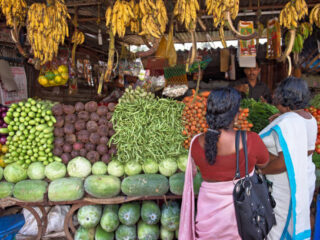
Vegitable Market
The Avanigadda Vegetable Market is not just a trading center but also a vital lifeline for the agricultural community of Diviseema and surrounding areas. Farmers from nearby villages bring in crops like paddy, green chilies, leafy vegetables, tomatoes, brinjals, okra, and seasonal fruits, ensuring a wide variety for buyers. The market also serves as an employment hub, supporting commission agents, coolies, loaders, transporters, and small food vendors who rely on the daily crowd for their livelihood. With its strategic location, the market links rural producers with urban demand, strengthening the agricultural supply chain. During peak harvest seasons, the bustling activity intensifies, with thousands of baskets and sacks of vegetables being auctioned and transported every day. The strong network of middlemen and traders here helps stabilize incomes for farmers while providing affordable produce to consumers. Moreover, the market plays a role in fostering community interactions, as it becomes a daily meeting point for farmers, merchants, and buyers, making it not just an economic hub but also a cultural and social space in Avanigadda. The Avanigadda Vegetable Market is one of the largest and busiest agricultural trading hubs in the Krishna District, playing a key role in sustaining the rural economy of Diviseema. Situated in the heart of Avanigadda town, it draws hundreds of farmers from nearby villages every day who bring in fresh produce cultivated in the fertile lands of the Krishna River basin. The market is particularly known for its wide variety of vegetables such as brinjals, tomatoes, okra, leafy greens, gourds, chilies, and seasonal fruits. In addition to vegetables, farmers often bring groundnuts, pulses, and other minor crops, which add to the diversity of produce available. Because of its location and scale, it not only caters to local consumption but also supplies bulk quantities to distant cities like Vijayawada, Guntur, Hyderabad, and even coastal urban centers. The market functions as a central pricing hub for the region, with wholesale rates set here influencing prices in smaller village bazaars and weekly shandis. Early in the morning, traders and commission agents gather to inspect the day’s arrivals, bid on lots, and finalize wholesale prices. This system ensures that farmers receive competitive rates for their produce while retailers and bulk buyers get fresh supplies at market-driven prices. The daily auctions are lively and fast-paced, and the wholesale deals struck here often determine how agricultural earnings are distributed across the region. Transportation plays a crucial role in the smooth functioning of the market. Produce is usually packed in baskets, sacks, or crates and transported in bulk using lorries, tractors, and smaller trucks. The quick turnover of goods helps reduce wastage and spoilage, ensuring that most of the harvest is sold or shipped out on the same day. Buyers who arrive in the early hours of the morning often get access to vegetables harvested only a few hours before, making freshness the main attraction. This fast-paced supply chain has earned the market a reputation as one of the most reliable sources of farm-fresh produce in the Krishna District. Beyond trade, the Avanigadda Vegetable Market is also a hub of livelihood and community interactions. Hundreds of daily-wage workers, coolies, loaders, cart-pullers, and transporters depend on the steady flow of activity for their earnings. Small tea stalls, tiffin centers, and snack vendors thrive around the market, serving the farming community and traders who gather here every day. Commission agents act as intermediaries, helping farmers negotiate prices and arrange transportation, while also ensuring that the market functions smoothly. For many rural families, the market provides not only income but also social connections, as it becomes a daily meeting place where farmers exchange news, share agricultural practices, and build relationships with buyers and traders. During peak harvest seasons, especially in winter and early summer, the market reaches its busiest phase, with truckloads of vegetables arriving in huge volumes. The vibrant activity often starts before dawn and continues until afternoon, turning Avanigadda into a bustling center of trade. On festive occasions and before major holidays, the footfall increases even further as demand for fresh produce rises. For the farming community of Diviseema, the Avanigadda Vegetable Market is more than a trading space—it is a symbol of economic sustenance, agricultural prosperity, and cultural exchange.